Published on:

On December 2, 2025, the Taiwan’s High Prosecutor’s Office announced criminal indictments against a subsidiary of Japanese company Tokyo Electron (TEL) and several associated individuals for alleged theft of advanced Taiwan Semiconductor Manufacturing Company (TSMC) process technology. This case marks the first significant corporate indictment under Taiwan’s updated national-security framework, which is based in part on the U.S. Economic Espionage Act (18 U.S.C. §§ 1831 and 1832), and comes as the U.S. continues apace with its criminal enforcement of export control and trade secret statute violations.


Continue reading →

Published on:

On January 17, President Trump posted on social media that the United States would impose a 10% tariff effective February 1 on eight European countries (France, Germany, UK, Netherlands, Denmark, Norway, Sweden and Finland) until those countries accept his demand that the Danish Realm sell Greenland to the United States. The social media post indicated that the tariff rate would rise to 25% on June 1, 2026, if no “deal is reached for the Complete and Total Purchase of Greenland.” As of publication of this alert, the Trump administration has yet to publish any Executive Order or other formal announcement, and circumstances on the ground could change rapidly with contemporaneous political discussions over Greenland in Davos.

Continue reading →

Published on:

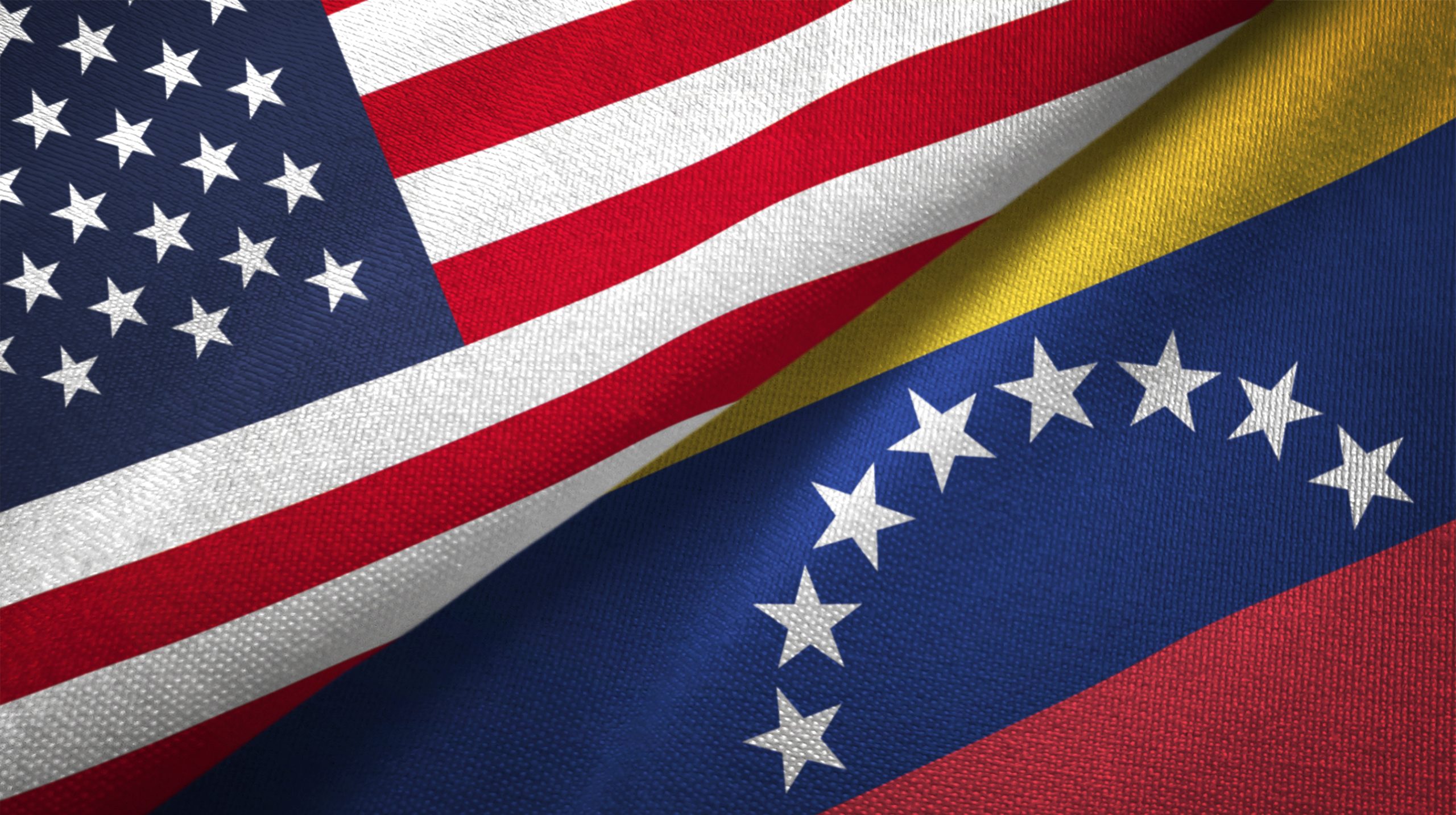
GettyImages-1089425302-300x168On January 3, 2026, the United States military conducted an operation in Caracas resulting in the extraction of Venezuelan President Nicolás Maduro and his wife, Cilia Flores. They currently remain in the U.S. facing federal charges based on indictments unsealed in 2020. Two days later, Delcy Rodríguez assumed the role of acting President and has been cooperating with President Trump and his administration with respect to the release of several political prisoners and U.S. citizens.

Continue reading →

Published on:

The Fiscal Year 2026 National Defense Authorization Act, signed into law on December 18, 2025, includes the Comprehensive Outbound Investment National Security Act of 2025 (COINS Act), which establishes a statutory framework to prohibit or require notification of certain outbound investments by U.S. persons in technology sectors deemed sensitive to U.S. national security. The COINS Act largely builds on the outbound investment regime implemented toward the end of the Biden administration under Executive Order (EO) 14105 and the U.S. Department of the Treasury’s existing regulations at 31 CFR Part 850, which went into force on January 2, 2025.

In “FY 2026 NDAA Includes New Statutory Framework for Outbound Investment Restrictions,” colleagues Nancy A. FischerMatthew R. RabinowitzSahar J. HafeezJulian M. BeachZachary C. RozenErin Kwiatkowski and Daniel Steinfeld dive into the details, examining changes introduced to existing regulations as well as what this significant step means going forward. They also a provide a chart comparing the notifiable and prohibited sectors against the current Outbound Investment Regulations.

Published on:

On 18 December 18, 2025, the European Union (EU) added 41 vessels to its sanctions list, targeting Russia’s so-called “shadow fleet, an opaque network of tankers used to circumvent restrictions on Russian oil exports. The measure forms part of the EU’s broader effort to degrade the Kremlin’s war financing and address persistent enforcement challenges at sea.

Continue reading →

Published on:

The EU has adopted new export controls on a range of emerging technologies (including quantum technologies, semiconductor manufacturing equipment, advanced computing, advanced materials and coatings for high temperature applications, additive manufacturing and certain life sciences tools), under the new “500-series” of EU-only controls.

Continue reading →

Published on:

In May 2025, the UK government published the Cross-Government Review of Sanctions Implementation and Enforcement policy paper (“Cross-Government Review”). Led by the Foreign, Commonwealth and Development Office (FCDO), and supported by key sanctions departments and agencies across the UK government, the Cross-Government Review identifies steps to improve and facilitate compliance with sanctions, increase the deterrent effect of enforcement, and strengthen the government’s enforcement toolkit.

Continue reading →

Published on:

On October 22, 2025, the U.S. Department of the Treasury’s Office of Foreign Assets Control (OFAC) announced significant new sanctions for Russia’s energy sector, designating Rosneft Oil Company (Rosneft) and Lukoil OAO (Lukoil) under Executive Order (EO) 14024 as Specially Designated Nationals (SDNs), along with dozens of directly named subsidiaries.

These designations prohibit transactions with and services related to Rosneft, Lukoil, any entity that they or other SDNs own 50 percent or more, or any property in which such entities have an interest, directly or indirectly, for U.S. persons and where U.S. primary sanctions jurisdiction otherwise applies.

Continue reading →

Published on:

Bureau-of-Industry-and-Security-seal-300x300On September 29, 2025, the U.S. Department of Commerce’s Bureau of Industry and Security (BIS) issued a long-anticipated interim final rule (IFR) amending the Export Administration Regulations (EAR) to extend Entity List and Military End User (MEU) List restrictions to majority-owned affiliates. Known as the “Affiliates Rule,” the IFR establishes a 50 Percent Rule comparable to how the Treasury Department’s Office of Foreign Assets Control (OFAC) enforces sanctions on affiliates of blocked parties.

Continue reading →

Published on:

Last month, the U.S. Department of Justice (DOJ) announced the launch of a “cross-agency” Trade Fraud Task Force “to bring robust enforcement against importers and other parties who seek to defraud the United States.” According to DOJ, the Task Force will “augment the existing coordination mechanisms” within DOJ and leverage expertise from DOJ’s Civil and Criminal Divisions and the Department of Homeland Security (DHS) “to aggressively pursue enforcement actions against any parties who seek to evade tariffs and other duties, as well as smugglers who seek to import prohibited goods into the American economy.”

Continue reading →